Founding-member pricing: $98 a year, ends September 30, 2026. →

Already a member? Sign in

“Millionaires don’t use astrology, billionaires do.”

J.P. Morgan

Know which weeks are yours.

Almanac Club reads your birth chart and tells you which weeks this year are built for your move — and which ones to sit out.

The raise. The hire. The price change. The conversation you keep pushing to Monday. You have the move. You are guessing the week.

Get your free reading

Four fields, about two minutes, no card needed.

Calculated to the degree from your exact birth moment

52 weeks · not one of them the same

There was a month where everything just landed.

Messages came back the same day. The thing you had been dreading turned out to be easy. The person you were sure would say no said yes before you finished the sentence.

You told yourself you were on a roll.

Then came the month you did the exact same work. Same effort. Same words in the same order. Sent to the same kind of people.

And it died in the inbox.

So you blamed the market. Then you blamed yourself. You opened that message again on a Sunday night, looking for the one sentence that killed it.

It was not the sentence. It was the week you sent it in.

Nobody ever gave you a clock.

You have been handed every other instrument. A bank app. A calendar. A performance review. A dashboard with fourteen numbers on it.

Every one of them tells you what already happened.

Not one of them tells you what this week is for.

So you push at the same speed all year long, every week, flat out — and a third of that push lands in weeks that were never going to pay it back.

That is not a character flaw. It is a missing instrument. You have been flying with no altimeter and calling yourself a bad pilot.

The people who moved markets never left the timing to chance.

Not one of them was a mystic. They were the most calculating people of their century. Every one of them paid to know when. That is the part they leave out of the biography.

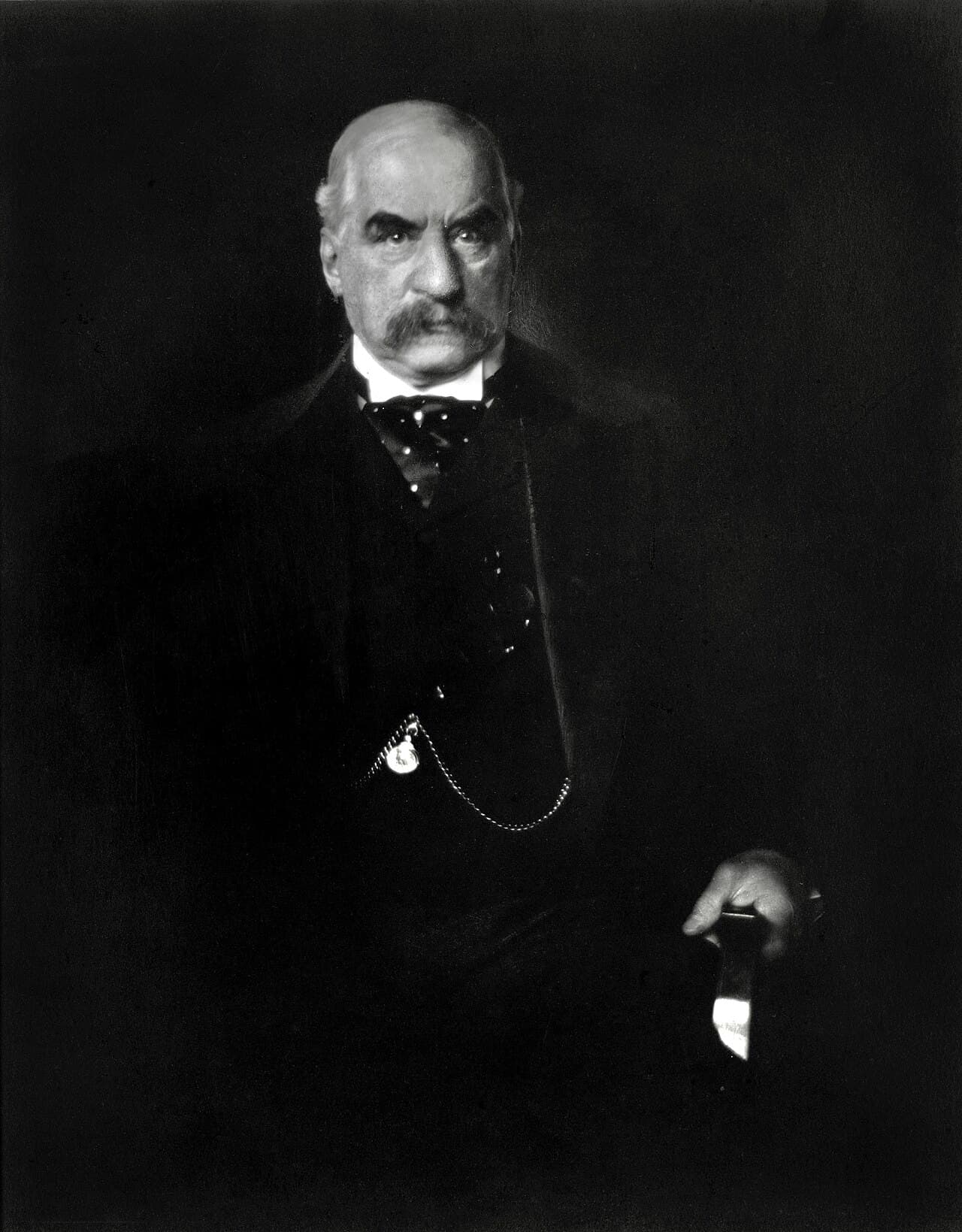
Edward Steichen's 1903 portrait of the financier J.P. Morgan

J.P. Morgan

Financier · 1837–1913

He bailed out the United States Treasury with his own money — and kept an astrologer on the payroll. Evangeline Adams read for Wall Street out of a studio above Carnegie Hall, and Morgan paid her for years. A man like that does not buy comfort. He buys timing.

Press photograph of the astrologer Evangeline Adams at her desk, casting a chart

Evangeline Adams

Astrologer · 1868–1932

She read for Wall Street out of a studio above Carnegie Hall and built a business on it. Tried for fortune-telling in 1914, she cast a stranger's chart in the courtroom. The judge ruled she had raised astrology to the dignity of an exact science, and let her go.

Official 1981 White House portrait of Ronald Reagan

Ronald Reagan

40th President of the United States · 1911–2004

For most of two terms, the most guarded calendar on earth went past an astrologer before it was set. Travel. Treaties. The hour an announcement went out. His own chief of staff put it in writing: virtually every major move was cleared in advance.

Roman bust of the emperor Augustus, Musei Capitolini

Augustus Caesar

First Roman emperor · 63 BCE – 14 CE

Augustus had his chart cast, then did what no cautious man does: he made it public and struck a silver coin with his sign on it. He wanted Rome to know he knew the date. He ruled for forty years.

You are running their problem on a smaller board. The stakes are yours, and they are big enough.

This is arithmetic. Not vibes.

The sky at the minute you were born is a matter of public record. So is the sky next Tuesday.

The relationship between the two is not a mood or an opinion or a feeling. It is a calculation. It runs off the same tables observatories use, and it comes out the same every time anybody runs it — you, me, a stranger in Osaka.

That number is what Morgan was paying for. It is what Reagan ran a superpower’s calendar past.

It used to cost a seat at that table. Now it costs four fields and two minutes.

The next window is already on its way. The only question is whether you spend it pushing uphill again.

Six sections about you. The fourth is the one people don't expect.

This is the map. It is free, it is yours, and it takes about eleven minutes to read.

  • 01

    Who you are

    The kind of person you actually are at work, in plain words. No star signs.

  • 02

    How your mind works

    Your full chart — Sun, Moon, Ascendant, ten planets, twelve houses, to the degree.

  • 03

    Strengths

    Three things you are built to do. Most people are only using one of them.

  • 04

    Blind spot

    Three things that keep costing you, named. This is the section people screenshot.

  • 05

    Communication

    How you land on other people — and the specific way you get misread in a room.

  • 06

    Career

    The work you are built for — and the kind that quietly drains you, even when you are good at it.

And then the last line

One move to make, and the date to make it.

Where the map ends

That date is one date.

Your year has fifty-one more weeks in it, and they are not interchangeable. The chart that produced your report can be run against any of them — that is what Morgan kept an astrologer on retainer for, every month, for years.

Where the year starts

Members get the other fifty-one.

A reading every morning on what today is for, and a chart you can ask before you send the message, name the price or take the meeting. You will see this offered once you have read your report. Not before.

It used to cost a seat at that table. It costs $98 a year — less than a dollar a day — and there is nothing to decide right now.

Two minutes from here.

  1. 01Name, birth date, birth time, birth place. That is the whole form.
  2. 02Your birth minute becomes a chart calculated to the degree, off real ephemeris data.
  3. 03Six sections on what you are built for, what keeps costing you, and what to do next.

Twelve months from now, the work is the same either way.

The only thing that changes is whether you knew what week you were standing in.

With the chart

  • You open the year knowing which weeks are yours and which ones are for building quietly.
  • The ask, the launch and the hard conversation each land on a date you chose.
  • Your effort goes where it gets paid back, instead of spread flat across twelve months.

Without it

  • You push at one speed all year and call the difference luck.
  • Good work lands in dead weeks and you file it away as a market problem.
  • The window opens, passes, and you find out afterwards. If you find out at all.

Before you type in a birth date.

The ten questions people ask before they hand over a birth minute.

One of these weeks is your next window

You already know the move. You are guessing at the week.

Four fields. Two minutes. Then you stop guessing.

Get your free reading

Four fields, about two minutes, no card needed.

Calculated to the degree from your exact birth moment

P.S.The next window on your chart is already on its way. It does not know whether you are ready, and it does not wait. The only thing you get to decide is whether you find out before it opens, or six weeks after it closed.